A family photograph contains six people and, at present, four names. The two unnamed people have not disappeared from the image. They have disappeared from our ability to explain it.
This loss can happen quietly. Someone always knew who everyone was, so nobody wrote it down. The photograph moved into a box. The person who knew became unavailable. A familiar picture turned into a set of questions with shrinking opportunities for answers.
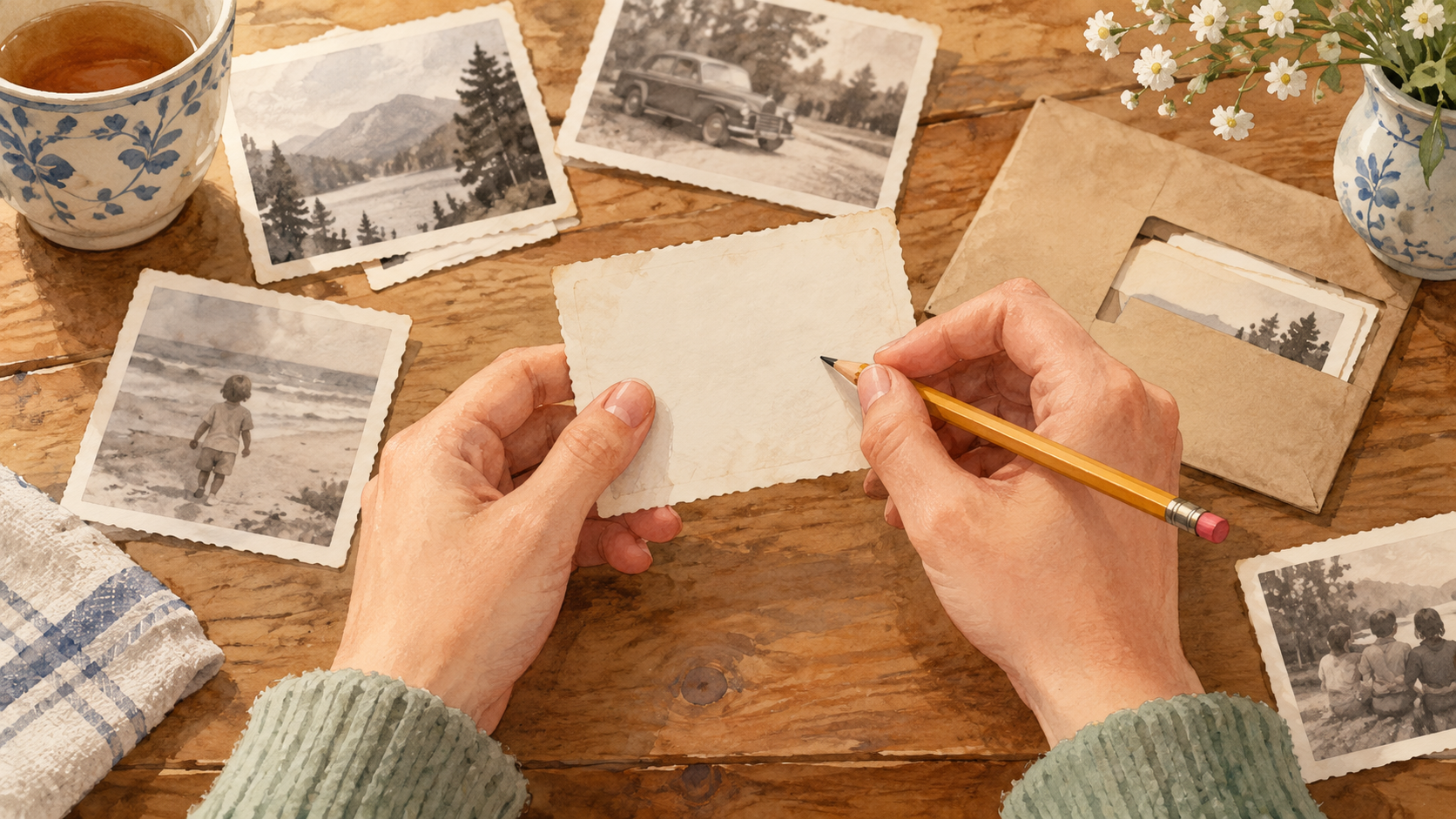
When I add a note, I start with what is known and say how it is known. Names, approximate place, date if supported and the person who supplied the information. If a name is tentative, the note remains tentative. A confident guess can be harder to undo than an honest blank.
I keep the note in an appropriate separate sleeve or accompanying record rather than treating every old photograph as a convenient writing surface. The photograph's condition and materials matter, and archive guidance is useful before attempting to mark or store fragile originals.
A digital copy needs its own association with the note. Otherwise, the useful information remains in one folder while the picture travels through several messages without it. I use a simple recognizable filename and preserve the relationship between the copy and its description.
I also avoid treating a family story as a license to publish a private image. Recording information for relatives and sharing it widely are different decisions. The people connected to the photograph may have views about both.
The two missing names are still missing. We have added the names we do know, the source of that knowledge and a description of the place. The next person opening the box will inherit a smaller question, which seems a worthwhile piece of work.
A thought worth keeping?